Same War, New Country
America's wars don't end — they haunt the next one: Iran is the ghost of Iraq is the ghost of Afghanistan is the ghost of Vietnam. When will we learn?

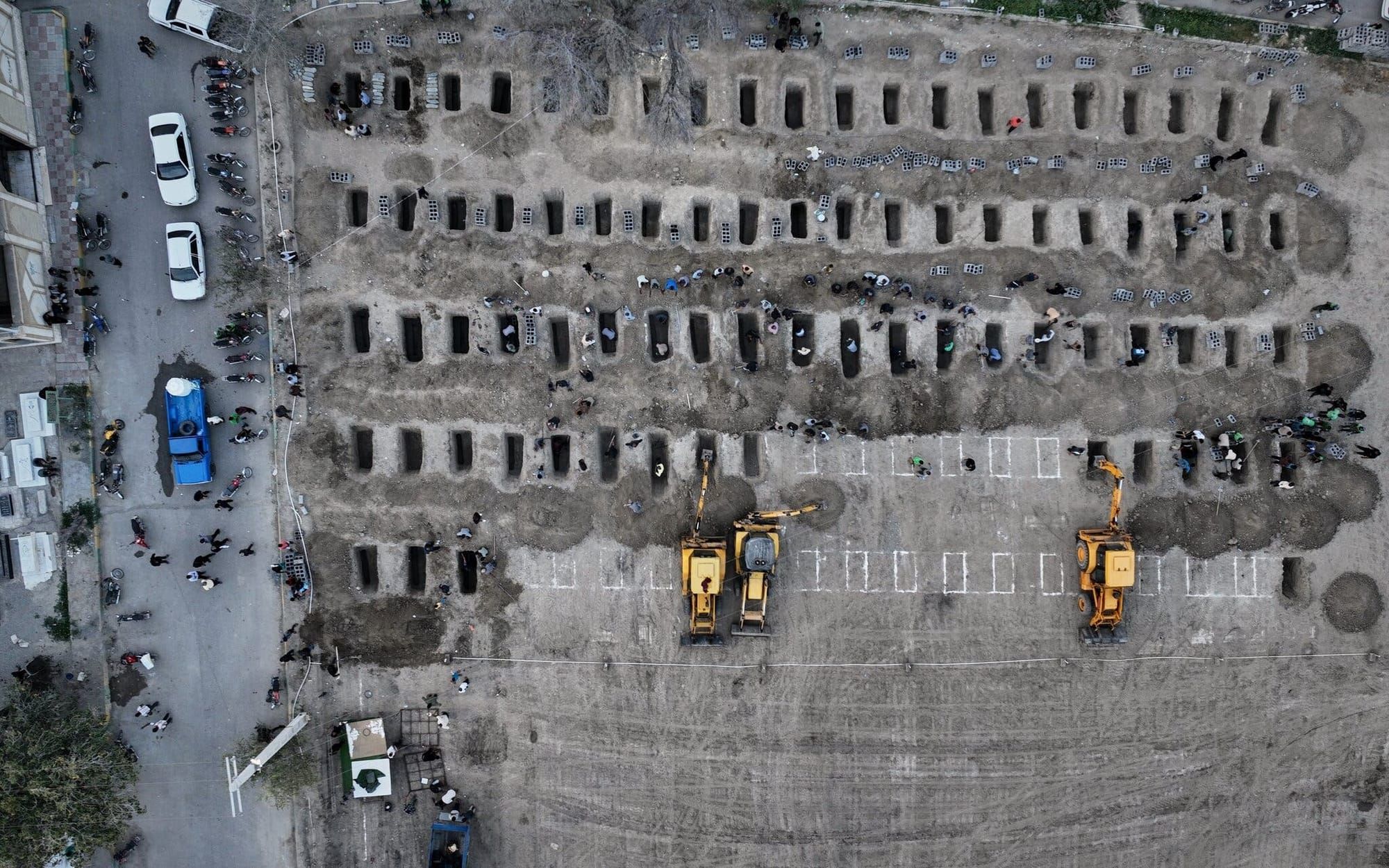
SITUATIONAL UPDATE: THE WAR ON IRAN
- We're entering week two of the war. The US has hit hundreds of targets in Iran, which has retaliated against US and Israeli targets across the Middle East, including military bases and embassies. Both sides are accused of targeting civilian locations. Iran continues to accuse Israel of false-flag operations across the Middle East, including one in Azerbaijan that killed at least two people.
- War and no peace (yet). Trump said the only way this ends is with Iran's "UNCONDITIONAL SURRENDER," which Iran's president called a "dream that they should take to their grave." Leaders from Oman and several other Arab states are meeting to find a diplomatic path to ending the war.
- POWs? Iran's head of national security, Ali Larijani, claimed Saturday that Iran had captured several American soldiers and that the US is lying about how many troops have been killed. The US denies it.
- The fallen. Six US soldiers were killed in Kuwait on Sunday when an Iranian drone strike hit an operations center in a civilian port. Trump attended a dignified transfer for them on Saturday — wearing a baseball cap. It's a ceremony, not a tailgate.
- Succession. After the killing of Supreme Leader Ali Khamenei last weekend, religious leaders still haven't announced a successor. Iran says they won't negotiate until one is named. Trump told ABC's Jonathan Karl that the US had killed his top choices.
- Not cool, man. Gulf states are said to be disappointed with the US, who they say did not give them a heads-up that they were about to start a war and is prioritizing the defense of Israel.
- The timeline. Secretary Hegseth says the US is expecting eight weeks of combat — twice as long as Trump's original estimate.
- Human toll. Death tolls vary, but in Iran it's about 1,250. Lebanon: 217. Israel: 11. Several more in other Gulf states.
- For live coverage, check out Al Jazeera.
And finally, I feel obligated to remind you to spring your clocks forward one hour tonight. And if you have young children, may the force be with you.
#1: THE MINAB GIRLS' SCHOOL STRIKE
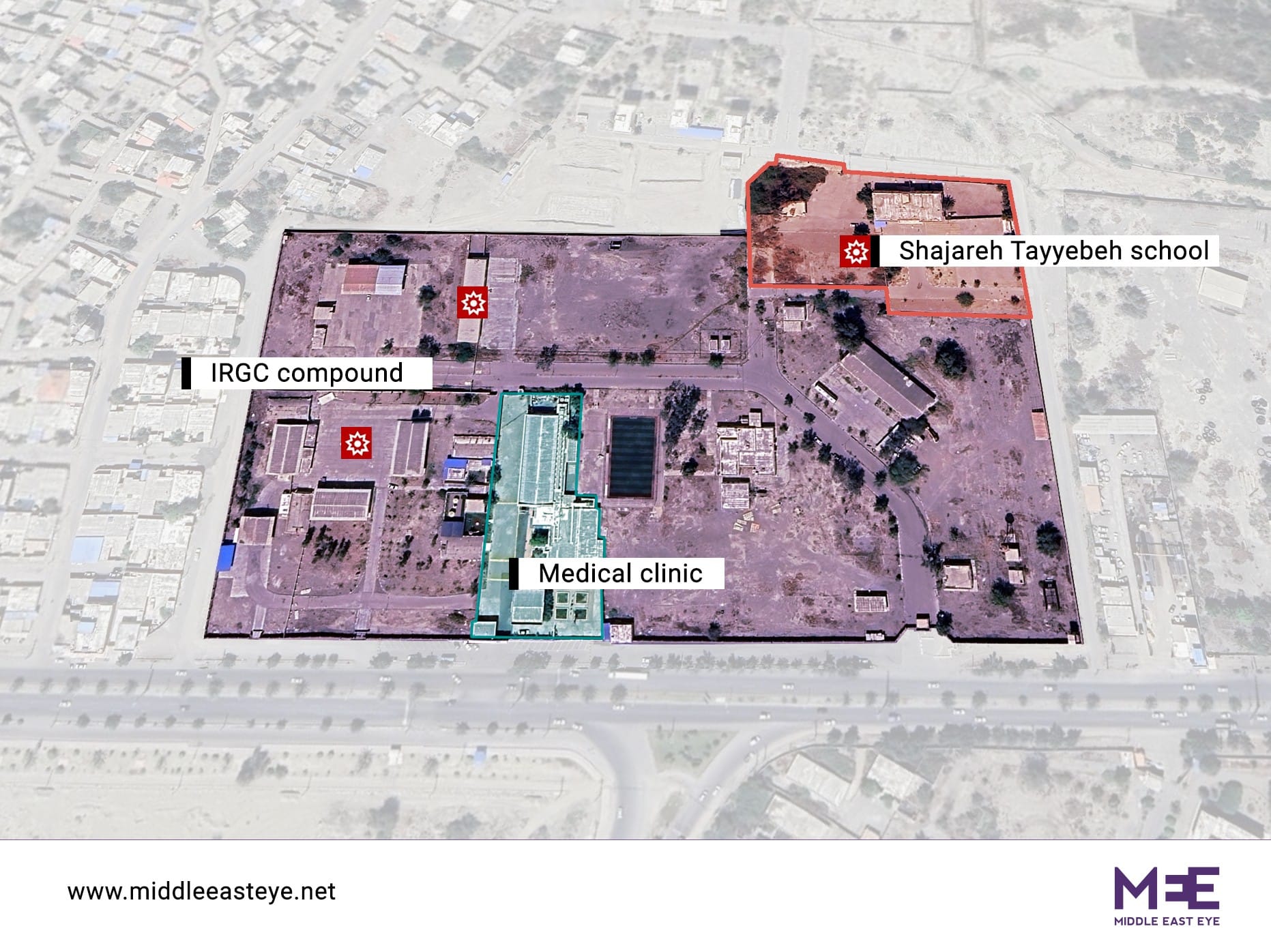
A strike on a girls' school in Minab, Iran, killed at least 165 people on Saturday — mostly children ages 7 to 12. Dozens of families had dropped off their children at the Shajareh Tayyebeh school on Saturday, which is the start of the school week in Iran. Sometime between 10 a.m. and 10:45 a.m., a missile hit the school, destroying most of it. Several investigations have concluded that the US military was most likely responsible. Here's what we know so far:
- Investigations. According to investigations by The New York Times, The Guardian, Al Jazeera, and others, the US is most likely responsible for the attack. Two military sources told Reuters that, barring new information, their investigation is also pointing to US responsibility.
- Nearby Strikes. The school sits near an IRGC compound 600 miles from Tehran, near the Strait of Hormuz. Six buildings belonging to the IRGC were hit with precision strikes by the US, according to sources speaking to CBS. The school, which sits outside the military's perimeter, was also struck nearly simultaneously, according to an expert who reviewed the available evidence for Reuters. To reach an accurate conclusion, experts would need to examine weapon fragments near the site.
- Official Line. The White House and the DOD both said they are investigating the incident but noted that they do not intentionally target civilians. US officials had already publicly acknowledged conducting strikes in the area.
- Was It a Mistake? It's possible. Until 2013, the school sat inside the military barracks, but satellite imagery suggests the school was walled off from the base between then and 2016. A barrier was built between the school and the IRGC compound. Two play areas for children can be seen right outside the school. So for at least 10 years, the school has not been part of the military compound — and that is easily verifiable from satellite imagery. It is possible the US could have been using outdated satellite imagery when they attacked, thinking the school was part of the military compound.
- But, here's why it might not be. Whoever attacked did not strike a civilian clinic that opened last year and sits between the IRGC compound and the school. As Al Jazeera reports: "This exclusion cannot be explained as a coincidence; it strongly indicates that the executing party was operating with coordinates and maps that distinguished between the complex's different facilities. If the intelligence was up to date enough to spare a clinic that had been open for only one year, how did it fail to identify an elementary school that had been separated from the military complex and had become a clearly defined civilian institution for more than 10 years?"
- Bottom line (right now). Per Al Jazeera: "Either US and Israeli forces relied… on a very old, outdated intelligence target bank (dating to before 2013), which would constitute grave negligence and reckless disregard for civilian lives; or the strike was carried out deliberately and with prior knowledge to inflict maximum societal shock and undermine popular support for Iran's military establishment."
- Propaganda. Misinformation spread immediately after the attack. Some accounts claimed the footage was old footage from Pakistan which was later debunked.
- The rule of law. Attacking civilians is against international law. The US knows this — it helped write the rules. Law professor Shannon Bosch: "The rubble of a girls' school is not evidence that the law is meaningless; it is a stark reminder of why the law exists, and why insisting on compliance remains essential."
The historical precedent is the strike on the Kunduz hospital — run by Doctors Without Borders — in Afghanistan in 2015 under President Obama. The US eventually acknowledged it and disciplined (lightly) those involved. The question is whether that level of accountability is even possible in this political environment, with this administration.
#2: WHY ARE WE AT WAR?
Depends on who you ask, and on what day. Maybe even the time of day. For the last week, we have heard numerous reasons from the Trump administration, senior officials bumbling over answers, backing up, running over their reasoning before shifting gears in another direction. For something so consequential, you'd think there would be a definitive answer. Not with this bunch.