The Art of a Bad Deal
Trump promised victory. His Iran agreement looks more like failure.

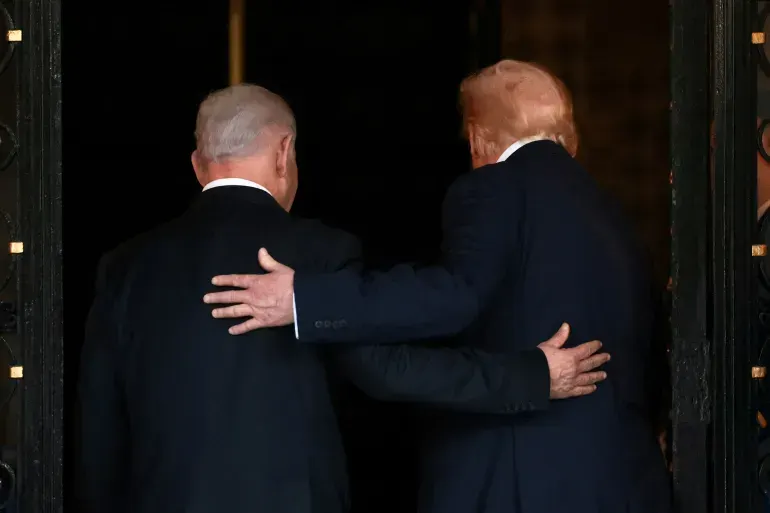
Happy Father's Day and Summer Solstice! In this week's top news:
President Trump finally found an off-ramp from his war on Iran. The problem is that Israel does not seem interested in taking it. Plus, why the new acting director of national intelligence has Democrats and election experts worried ahead of the midterms.
#1. War on Iran
As of Saturday evening, Vice President JD Vance is on his way to Switzerland to meet with his Iranian counterparts and Pakistani mediators to finalize an agreement to extend the ceasefires and end the wars on Iran and Lebanon. An Iranian delegation has already arrived in advance of the talks, which are scheduled for Sunday.
This weekend's trip was supposed to be about a formal signing ceremony for a deal that was already done. But, all that was scrapped when Israel continued to strike Lebanon in violation of that deal, killing at least 83 people on Friday.
Here’s what led up to this:
- As we discussed in last weekend’s newsletter:
- The US, Iran and Pakistan announced that both sides had agreed to a Memorandum of Understanding — or MOU — to extend the ceasefires in Iran and Lebanon and work toward a more permanent agreement to end hostilities.
- The text of the deal was not released at the time. But the Trump administration said Iran had: 1) agreed to reopen the Strait of Hormuz and 2) promised not to produce a nuclear weapon. If those conditions were met, US sources said only then would they lift economic sanctions on Iran.
- Iranian and US sources also confirmed that the deal included Israel’s withdrawal from Lebanon and a ceasefire. But... it was also reported that Netanyahu had been left out of the negotiations — and was seemingly expected to comply with an agreement that did not seek his input or approval.
- By Monday, there was still consensus that an agreement had been signed — but more contradictions about what was actually in it.
- For example, Trump said the Strait of Hormuz would be open “toll-free,” while Iran said there could be fees or tolls down the road.
- Reports also indicated that Iran would be paid billions of dollars for rehabilitation and economic development. Trump claimed none of that would come from the US.
- When reporters asked when the public would get to see the MOU, Trump said it would come “sometime after Friday” when the deal was scheduled to be officially signed in person in Geneva.
- Meanwhile, in Israel, Netanyahu tried to sell the deal as a win to the public and members of his political coalition, who were unhappy about it. He claimed he told Trump that Israel has its own interests and would remain in Lebanon even though Iran had made clear that any Israeli aggression in Lebanon would be a deal-breaker.
- By Tuesday, the deal was still being described in conflicting ways — and the White House still refused to release it. When asked why it had not been shared, Trump told reporters, “I’d like to get a formal setting first..." (referencing the Geneva signing ceremony).
- The AP reported that Netanyahu still hadn't seen the MOU. It's also the day Trump started turning on Israel. He was unusually critical, claiming its attacks on Lebanon went overboard and that, without the US, "Israel would have been blown off the face of the earth, one hundred percent."
- More telling: beyond the public and the press, Congress still hadn't seen the deal, and a bipartisan push to review it was building, Semafor reported. Senate Minority Leader Chuck Schumer said the White House hadn't even briefed the "Gang of Eight" — the bipartisan group of congressional leaders typically read in on intelligence matters like this, Reuters reported.
- Then, Saudi state-owned broadcaster Al Arabiya said it had obtained the text of the agreement and released it. That was the turning point of the week. According to the agreement they shared:
- Immediately, the US and Iran:
- end all hostilities, including in Lebanon;
- take no hostile action toward each other "from now on";
- do not threaten to use force against each other;
- respect each other's sovereignty;
- do not interfere in each other's internal affairs.
- will discuss Iran's nuclear program and enriched material over the next 60 days.
- Iran:
- "reiterates that it will never produce nuclear weapons" (note use of the word "reiterate" — Iran's reminder that the promise isn't new);
- reopens the Strait of Hormuz and clears all mines and obstacles.
- The US:
- lifts its blockade on Iranian ports and allows the sale of Iranian oil, immediately
- lifts all sanctions on an agreed-upon schedule;
- withdraws all forces from surrounding areas 30 days after the final deal is signed;
- oversees a rehabilitation and economic-development fund for Iran of no less than $300 billion, coordinated with "regional partners."
- Immediately, the US and Iran:
- On Wednesday, the pressure to release the MOU had become intense enough that a Trump administration official — who was granted anonymity — read the agreement aloud to reporters.
- There were two key differences between the version the administration read to reporters and the version reported by Al Arabiya.
- First, the administration’s version was more detailed about what would happen to Iran’s highly enriched nuclear material. The agreement said that, at minimum, the enriched material would be “down blended... under the supervision of the IAEA.”
- Second, in addition to reopening the strait and removing barriers to navigation, including mines, the agreement said passage through the strait would remain free for 60 days. After that, Iran and Oman, in consultation with other Gulf states, would determine how the strait is administered and what maritime services are provided. In other words: It is still unclear whether that could include fees later. But it certainly did not mean “no fees,” as Trump had claimed earlier in the week.
- The White House had hoped releasing the preliminary text would help, but instead it was clear, the US had lost. Trump tried to spin it by warning that if the deal was not completed within 60 days: “We go back to bombing." Still, Republicans were not happy that:
- Iran would get to sell oil immediately and that sanctions would eventually be lifted. Sen. Bill Cassidy of Louisiana said the deal looks “awful,” calling it a “tremendous foreign policy blunder.” Former Vice President Mike Pence said the deal “smacks of appeasement.” Former U.N. Ambassador Nikki Haley said there should be “zero sanctions relief.” And Trump’s former adviser Steve Bannon said: “Keep the sanctions, because if we lose that, it will take forever to get back.”
- Iran was getting $300 billion. When asked about it, Trump said it was fair because Iranians should not “starve to death.”
- The agreement said nothing about Iran’s ballistic missiles, which the Trump administration has repeatedly described as a major concern. Asked about that gap, Trump argued that Iran should be allowed to keep its ballistic missile program because it would be unfair to deny Iran missiles while neighboring countries have them. “If Saudi Arabia and Qatar, and they all have some, I would say in relative proportion, I think it’s okay,” Trump told reporters.
- There were two key differences between the version the administration read to reporters and the version reported by Al Arabiya.
- Later Wednesday, after wrapping up the G7 summit in France, Trump attended a dinner hosted by French President Emmanuel Macron at the Palace of Versailles, where he was seen signing the agreement.
- By Thursday, though, it wasn’t Republicans the White House was worried about... it was Israel.
- Netanyahu again said Israel would not withdraw from Lebanon.
- Vance, meanwhile, was chastising Israel for pushing back on the deal: "Donald J. Trump is the only head of state in the entire world who is sympathetic to the nation of Israel at this moment in time," Vance told reporters. "If I was in the cabinet of the Israeli government, I might not be attacking the only powerful ally that I have anywhere left in the entire world."
- On Friday, The Washington Post reported that, according to its sources, “U.S. intelligence agencies have warned the Trump administration that Israeli Prime Minister Benjamin Netanyahu is likely to take steps that will undermine President Donald Trump’s effort to reach a lasting peace deal with Iran, as the Israeli premier faces intense political pressure to continue waging his country’s war in Lebanon…” The Post also reported: “The new U.S. intelligence report concludes that in the face of national elections this fall, Netanyahu’s political survival is linked to showing his domestic audience that he will not withdraw troops from Lebanon and that he is intent on escalating the fighting with Hezbollah, said one U.S. official familiar with the report."
- Also on Friday, Israel claimed Hezbollah killed four Israeli soldiers in Lebanon. Israel then attacked Lebanon, killing at least 83 people. Vance cancelled his trip to Switzerland to sign the deal, citing “logistical” issues.
- By Saturday, Iran said it had closed the Strait of Hormuz again after Israel's attacks on Lebanon. (The US has not acknowledged that it's closed, again). Vance was finally on his way to Geneva – claiming the meeting with Iran and Pakistan was to discuss the next steps in the deal. But, all signs suggest that this is more a meeting to salvage the deal that Israel is dead set on sabotaging.
#2) Israel's War on Lebanon
Angry about the deal with Iran, Israeli minister Itamar Ben-Gvir took to X on Friday with a genocidal tweet. "For every tear of an Israeli mother, a thousand Lebanese mothers must weep. All of Lebanon must burn!" he wrote.
In a note from X, the company claimed the post violated the site's rules but said it "determined that it may be in the public’s interest for the Post to remain accessible."
As Vance was leaving for Switzerland on Saturday, he claimed that the situation in Lebanon had "calmed down." After killing 83 people on Friday, Israeli attacks had killed another 16 by early Saturday after they claimed Hezbollah fired projectiles toward IDF soldiers. NBC reports that "Hezbollah said it had 'adhered to the ceasefire since Friday evening,' accusing Israel of making false claims to justify its attacks in an effort to 'sabotage the agreement' between Iran and the U.S."
Since March 2, Israeli attacks have killed 4,057, Lebanon's health ministry says. Israel says 32 of their soldiers and four civilians have been killed so far.

#3) Bill Pulte & the DNI Debacle
As of Friday, Bill Pulte is serving as acting Director of National Intelligence – taking over for Tulsi Gabbard who stepped down citing her husband's cancer diagnosis. Democrats are concerned that Pulte could interfere with the upcoming midterm elections.
How we got here – and why there is reason to worry:
- After Gabbard said she was leaving, Trump nominated Pulte as acting DNI, which alarmed Democrats and some Republicans.
- Democrats see Pulte as a Trump loyalist who has already shown he is willing to do the president’s dirty work. In his most recent job as head of the Federal Housing Finance Agency (FHFA), which oversees Fannie Mae and Freddie Mac, Pulte referred New York Attorney General Letitia James and Federal Reserve Governor Lisa Cook — both Trump targets — for potential criminal investigation over mortgage-fraud allegations.
- Democrats and some Republicans are also concerned because Pulte has no intelligence or national-security experience. Federal law requires a permanent DNI nominee to have “extensive national security expertise,” which seems like a reasonable baseline for the person overseeing the country’s 18 intelligence agencies — even temporarily.
- Democrats warned they would not renew Section 702 of the Foreign Intelligence Surveillance Act — or FISA — unless Trump guaranteed Pulte would not serve as acting DNI.
- Facing that pressure, Trump nominated Jay Clayton as the permanent DNI. Clayton, currently the U.S. attorney for the Southern District of New York and a former SEC chair, also has no intelligence experience. But he is viewed as more moderate, and Democrats appeared more open to supporting him.
- Republicans tried to move quickly to confirm Clayton before Pulte took over and before the fight further derailed FISA. With Gabbard set to step down Friday, Clayton’s Senate confirmation hearing was scheduled for Wednesday. But just hours before it was set to begin, Trump abruptly announced on Truth Social that he was “cancelling” the hearing.
- Trump does not have the authority to cancel a congressional hearing, but he effectively ordered Clayton not to appear, forcing Senate Intelligence Committee Chair Tom Cotton (R-AR) to postpone it. Cotton called Trump's decision “regrettable.”
- Trump accused Republicans of falling into a Democratic “trap,” claiming — without evidence — that Democrats would oppose FISA anyway, so there was no reason to appease them by rushing Clayton through, especially since Clayton’s successor had also not been approved.
- Then Trump added another demand “to add a slight bit of intrigue,” as he put it. “[F]or the Good of the Nation, and the People of our Country, I will not approve FISA without THE SAVE AMERICA ACT going along with it,” Trump said. The SAVE America Act would impose new proof-of-citizenship requirements for voter registration and does not have enough Republican support to pass.
- As The New York Times notes, the DNI has played an important role in recent elections by gathering intelligence about foreign efforts to influence the vote. The Trump administration has claimed a broader mandate, including 'security concerns' beyond foreign interference. If Republicans are at risk of losing the House or Senate, a loyalist DNI could be useful by amplifying claims about foreign interference, cyber threats or election-security concerns in ways that give Trump and his allies political cover to challenge, delay or delegitimize the results."
- As “acting” DNI, Pulte can serve for 210 days without congressional confirmation — meaning he could remain in the role until January 2027, well after the November midterm elections.
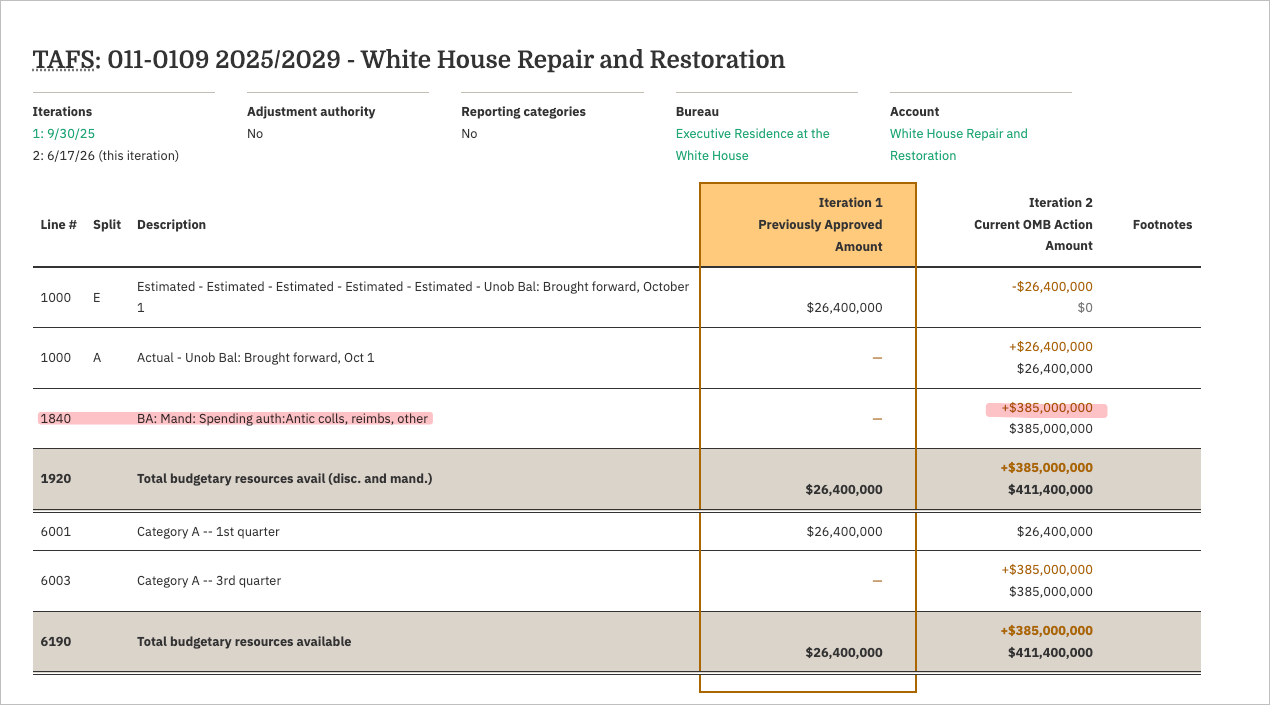
- American taxpayers will cover more than half of the now-$600 million bill for Trump’s ballroom project, despite his claims that private companies would pay for all of it, The Washington Post reports, citing contractor invoices. To get the taxpayer-funded Secret Service budget to cover part of the renovation, a White House lawyer explained in a July 30 email that she had added language to the contract “to tie the project more closely to security-related issues since USSS U.S. Secret Service is providing the funding.” Office of Management and Budget records (I pulled above) appear to show the administration moved more than $385 million in taxpayer funds from the Secret Service budget to an account called “White House Repair and Restoration” this month.
- The Trump administration is moving forward with plans to dismantle the Department of Education. Key offices responsible for assisting the country’s students are being parceled out to other departments, the AP reports. “Advocates said the changes would create uncertainty around services relied upon by millions of students and families.” Only Congress can formally shutter the department. But by shrinking it and scattering its responsibilities across the government, the administration is essentially rendering it useless.
- Rep. Jamie Raskin (D-MD) says the House Judiciary Committee has received “troubling reports” that FBI Director Kash Patel used more than $1 million in agency funds to pay close aides in exchange for engaging in “misconduct.” In a letter to Patel released by Raskin’s office, the lawmaker says the payments are “unlawful,” in part because they exceed salary caps for agents.
- Just last week, Trump was boasting about spending $14 million to paint the bottom of the Lincoln Memorial Reflecting Pool “American flag blue” ahead of the country’s 250th birthday next month so that it would “reflect” more. Now it just looks like crap. The blue paint is chipping off the bottom, and the water has turned puke green from algae overgrowth. Naturally, the Trump administration is accusing people of sabotaging it. But the simpler explanation seems pretty obvious: earlier this week, the administration had the National Park Service pour hydrogen peroxide into the freshly painted pool in an amateur attempt to kill the algae — which is probably why the paint started coming up.
- At least 776,000 children have lost access to the Supplemental Nutrition Assistance Program one year after Republicans cut the program through the so-called Big Beautiful Bill, ProPublica reports. Republicans imposed tougher work requirements, pushing millions of people and their families off the program.
- Six companies — Caterpillar, Volvo, Hyundai, Doosan, Hitachi and Komatsu — could be complicit in war crimes in Lebanon, human rights experts warn because Israel is using their construction equipment to demolish homes and critical infrastructure in Lebanon, The Guardian reports.
- Israel killed Al Jazeera cameraman Ahmed Wishah in Gaza – making him the 12th network employee murdered since October 2023. Wishah's brother, Mohammed, was killed in an Israeli strike in April. He was also a journalist. Israel has claimed without evidence that both men were part of Hamas. "In its statement Saturday, Al Jazeera said it is determined 'to take every available legal measure to prosecute the perpetrators' of the 'crimes' against its staff in Gaza. It added that it remains committed to covering events in the enclave despite the Israeli military’s 'attempts to silence the voice of truth'." According to The Committee to Protect Journalists, at least 260 Palestinian journalists have been killed by Israel since October 2023.
- California Gov. Gavin Newsom says the DOJ is investigating him and his wife. Newsom claims it is because he is considering running for president. His office said FBI and IRS agents have contacted associates and former employees and issued subpoenas for documents, including financial records related to his wife, Jennifer, who runs a film production company and a nonprofit focused on gender equity, Politico reports.
- Georgia Republicans have decided not to redraw the state’s congressional districts ahead of 2028 — a move that could have diluted Black voting power — following a push from Gov. Brian Kemp.
- The Trump administration can’t dismantle a key ocean-monitoring program known as the Ocean Observatories Initiative — at least not yet. Sens. Lisa Murkowski (R-AK) and Jeff Merkley (D-OR) introduced a bill blocking the National Science Foundation from scrapping the program, which monitors ocean conditions and extreme weather events, including those linked to climate change.
Have suggestions, feedback, questions? Email me at huma@fromthefifth.com
Are you enjoying The Fifth? Please consider sharing it with a friend!